
Have you ever noticed how easily we trust a recommendation from a favourite friend or family member? A simple “you might like this” often stays with us more than any advertisement ever could.
Brands have found a way to replicate that same trust, not through traditional ads, but through voices people already follow and genuinely enjoy listening to.
When a product is introduced by someone you already look up to, it doesn’t feel like a pitch. It feels like a conversation. That sense of authenticity is exactly what has turned influencer marketing into one of the fastest-growing spaces in modern business, a $32–33 billion industry globally, growing over 25% this year in India alone.
It’s a new way for brands to share their message, one that feels less like marketing and more like a recommendation from a friend.
What is Influencer Marketing?
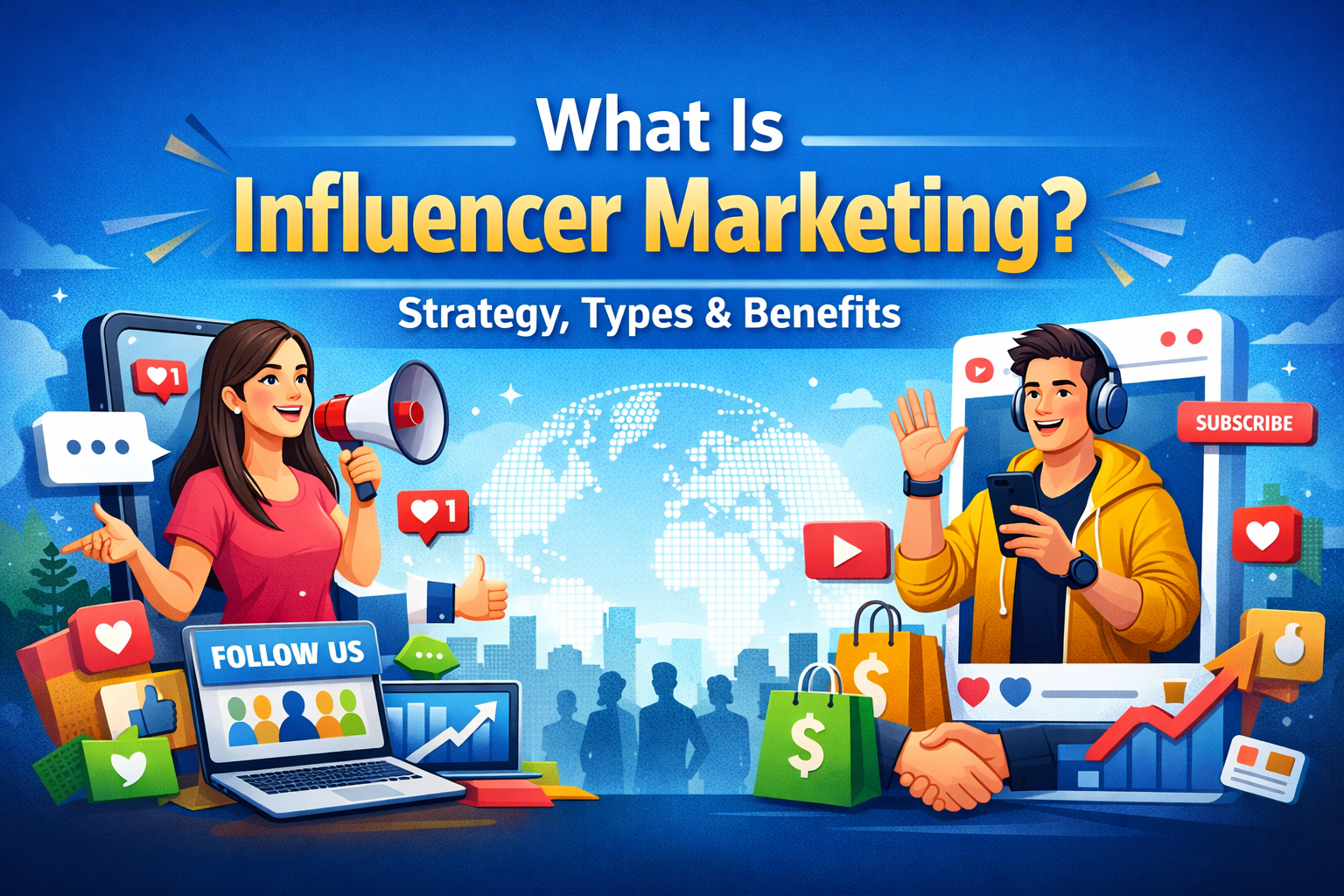
At its simplest, influencer marketing is when brands collaborate with creators who already have an audience.
But that definition doesn’t really capture it. Because the real value isn’t in the collaboration, it’s in how the message is delivered.
A product placed inside someone’s everyday content lands very differently from a traditional ad. It feels closer to a recommendation. And people respond to that.
Importance of Influencer Marketing
Brand Awareness & Visibility
Visibility (Without Fighting for Attention)
Getting noticed online is hard and algorithms don’t make it easier, but influencers already have attention, so you’re not competing for it; you’re stepping into it.
Brand Credibility & Trust
Trust Doesn’t Need to Be Built From Zero.
This is probably the biggest reason brands invest here.
People don’t instantly trust brands. But they trust people they’ve been following for a while. That trust transfers and sometimes faster than expected.
Target Audience & Reach
You Reach People Who Already Care. A lot of marketing wastes budget on the wrong audience, whereas influencer marketing helps in targeting the right audience directly.
So basically, you’re showing up in front of people who are already interested in that space.
Higher User Engagement & Conversions
Engagement Feels Different Here:
There’s a difference between someone seeing your ad and someone actually interacting with it. Influencer content usually gets the second and the content doesn’t feel forced.
Quality/Creative Content Creation
Content produced by influencers is known for its creative approach towards the brand, product or service. Their storytelling and convincing skills are their superpower.
Some brands still try to control everything, which is not wrong, but give the creators creative freedom.
Let creators create, that’s literally what their audience follows them for.
Types of Influencers according to followers
Influencers are divided into four categories based on their number of followers.
Nano Influencers: 1k-10k
They have a very small audience, but it’s often very close-knit. Their followers actually pay attention to what they post, which makes their recommendations feel more reliable.
If you’re targeting a niche or a local audience, this category tends to work better than expected.
Micro Influencers: 10k-100k
This is where things get interesting. Micro influencers strike a balance; they have enough reach, along with a sense of relatability. A lot of brands prefer working with them because their audience still trusts them, and the engagement usually reflects that.
Macro Influencer: 100k-1M
Macro influencers bring scale. They can help you reach a much wider audience in a shorter time, which is useful if awareness is the goal.
That said, the connection with followers might not feel as personal as with smaller creators.
Mega Influencer: 1M+
These are the big names, celebrities or creators with massive followings.
They’re great for visibility, no doubt, but at the same time, their content can sometimes feel more like a campaign than a casual recommendation.
Types of Influencers according to Niche
| Type | Focus Area |
| Lifestyle | Every day content and routines |
| Food | Recipes and reviews |
| Gaming | Streams and gameplay |
| Fitness | Workouts and health |
| Beauty | Skincare and makeup |
| Travel | Destination and guides |
| Tech | Gadgets and their reviews |
| Fashion | Styling and fashion trends |
How to Build an Influencer Marketing Strategy
Set Goals & Budgets
Set your objective in the beginning and draw a budget that you can execute to reach your objective. Know what you are looking for; will it be visibility, engagement or sales, and with budget planning, it is easy for you to decide whom to work with and how far you can take the campaign on a larger scale.
Find Right Influencers
The real issue is not selecting an influencer with the largest followers, but an influencer who makes sense with my brand. At certain times, it’s better to select a small creator, or at certain times, it may be better to select a famous influencer so as to gain access to a wider audience. The selection totally depends on what one wants to do.
Analyze Influencers
Analyze Influencers
As a final check-up before deciding, make sure to look past the follower numbers. Ensure their audience is actually the right age group, location and interests for the brand. Also consider the quality and consistency of their content. It’s always possible that an influencer has an immense following, but the number of views and comments suggests something very different. Examine where they’re most active and how frequently they post. Ultimately, you’re seeking a natural and authentic connection, not necessarily the loudest.
Outreach Influencers
After you have a short list of people, you can just reach out. This will be via email, a DM on Instagram or Facebook or you might go via a manager. Whatever seems to be easiest and simplest is what will work for you.
Establish Legal Contracts
The sooner it is all nailed down, the better. This will include the deliverables, timeframe, cost and terms of use. This really avoids any issues in the future.
Measure Performance
After the campaign is running, monitor its performance to see how it’s really performing.
Monitor things like engagement, reach, clicks or even conversions, if that is what you want to monitor. This will give you a better indication of what worked and what did not.
So that you are not just guessing next time.
KPIs of Influencer Marketing
Visibility
- How many people came across the content?
- Total impressions and reach.
- Mentions or tags related to your brand.
Engagement
- Likes, comments and shares on posts
- Saves, replies or interactions.
- Increase in followers during the campaign.
Performance
- Clicks to your website or landing page.
- Actual conversions or sign-ups.
- Overall return compared to what you spent.
Conclusion
Influencer marketing works and the results depend on how it’s done.
Some campaigns perform really well. Some don’t. That’s part of it. The difference usually comes down to who you choose to work with and how much freedom you give them.
Because at the end of the day, people don’t connect with brands.
They connect with people. And that’s exactly what this strategy is built on.
FAQs
Q1. What does influencer marketing do?
It helps brands reach audiences through creators people already trust. Instead of talking at the audience, it lets products be introduced in a more natural, relatable way. This makes the message feel more personal and easier to connect with.
Q2. What are 4 types of influencers?
Influencers are usually grouped by their following: nano, micro, macro and mega. Nano and micro creators have smaller but highly engaged audiences, while macro and mega influencers have a wider reach. Each type brings a different kind of connection and visibility.
Q3. Advantages of influencer marketing.
It builds trust quickly because the recommendation comes from a familiar face. It also helps brands reach the right audience more effectively and create content that feels more authentic and engaging. Plus, it often blends seamlessly into what people are already watching.
Q4. What skills do influencers need?
They need to understand their audience and create content that feels real and engaging. Good storytelling, creativity and consistency matter a lot. Along with that, communication and a sense of authenticity are what truly help them stand out.